
It wasn’t that long ago that a website visitor was forced to manually switch between classic and mobile view if they looked at your website from their phone.
- Your Websites Are Now Mobile Friendly Cell Phones
- Your Websites Are Now Mobile Friendly Resorts
- Your Websites Are Now Mobile Friendly Countries
Businesses were only just beginning their journey in the online world and consumer expectations for a mobile-friendly website were far less.
If your web content is mobile-friendly, it can be easily accessed by the people when they are mobile. So, if you are converting your website to mobile-friendly, you are giving your website a chance to lead online marketplace. Targeting Customers Become Easier: Mobile-friendly websites are easier to access. A mobile-friendly website is one that correctly displays on mobile & hand-held devices such as your iPhone, Android or Blackberry as well as your iPads & tablets. Also known as responsive web design, these website designs will “respond” to ANY device or display, be it your cell phone or your 46″ LCD screen.
Nearly a decade on and merely having an online presence isn’t good enough. If someone visits your website from a smartphone and their experience is less than smooth, your business will lose customers. It’s that simple.
Today, close to 60% of internet traffic comes from mobile devices. And the number of mobile users are increasing by the day. So the future of the internet is in smartphones, and unless your site is mobile friendly, you are going to be outsmarted.
Free Download
The Ultimate Guide to Organic Traffic for Small Business
Where can you begin mobile-friendly optimization?
If you start researching on “How to optimize my website for mobile?”, you will have to swim through a sea of information. And the chances are that you will get lost in the vastness of it. But, here are a few pointers to help you sail across it, without going astray in the fresh wave of opinions.
Let us begin by being responsive because a website which doesn’t respond is already dead. A user finds your site on their mobile phone, and things are just awry. Words are misaligned, and images are scattered here and there. It just won’t do. So start by making your page responsive. Try to create designs that will fit with a simple tweak, no matter which phone it is being viewed from. Even if it involves a bit of reprogramming and code changes, go for it. You are indeed making an enduring change.
Now that you have put responsiveness on your checklist, it’s time to work on your coding. Optimizing your code will increase the page speed and help you retain visitors. On a desktop computer, there is a much wider screen to impress your visitor, but mobile screens are too small to fill the eyes, so correct your code. Focus on reducing image size and cutting out unnecessary HTML codes. You can leverage some minifying tools to get through this plausibly tough task.
Thirdly, build the capacity of your mobile website through HTML5. If you observe the trend today, technology changes nearly every quarter, perhaps in sync with the quarterly plans of multinational companies. So, you cannot go on rewriting scripts for your site to suit the new wave of technology. Because that way you will be the sailor who built his ship all life and died before he could get his boat out there. HTML5 will be accessible on any device that treads on your site with all the interactive elements intact.
5 Mobile-Friendly Focus Areas to Improve SEO
Once you have begun and are little into the depths of the SEO ranking game, your checklist of daily activities and analysis may get too long for the day. But everyone has only 24 hours. The thing is to prioritize your list and conduct a cost-benefit analysis of various items in your checklist.
1. Design to your needs
What is it that makes a user (your client or anybody), stay longer on your mobile website? Think of a shop, why do they use mirrors in small shops? It is to create an illusion of affluence. The tiny shop looks magnified due to multiple reflections from the mirrors. You don’t get out of such a shop; you linger because your eyes are spell-bound.
This applies to your website as well. If your design is not pleasing the eyes, then users are going to click out in 20 seconds.
One thing that is essential before deciding on mobile optimization plans for your website is to outline clearly:
- Nature of your business.
- Type of users.
- Survey on types of devices likely to visit your site.
It is essential to understand that your website is a visual treat to your potential clients. It has to be delicate, informative and smooth. The more comfortable the user is, the more they are impressed. So, do not stuff your mobile website with complex designs. Keep it simple, yet attractive.
2. Finely balance your page speed
Why do you optimize websites for mobile phones? Of course to improve your business. But a study conducted by Hubspot has found that even a second’s delay in loading can reduce your conversions by 7%. So if your organic traffic is not generating conversions, then you are running a fool’s errand.
While trying to balance the loading speed of your website consider the following aspects:
- Set Benchmarks to Improve Loading Speed – Calculate the average rate of the loading speed using an appropriate tool like Google PageSpeed Insight or Pingdom. Once the average speed is known then, set the target the loading speed at 3 seconds or lower.
- Pick the Right Web Hosting – It is the single biggest factor that can help your loading speed improve.
- Improve Architecture – Structure your website for seamless user experience and make it easy for Google crawlers to go through it.
3. Use Accelerated Mobile Pages
Recently, in research conducted by Volkswagen, El País, along with creative company DDB and Google, showed that AMP-HTML ads help increase conversions.
The AMP-HTML ads are an alternative to slow and disruptive ads. AMP ads using the AMP-HTML make ads light, fast and safe. Thus we may say that Google’s long-term campaign for AMP (Accelerated Mobile Pages) has paid off.
But what exactly is an AMP?
An Accelerated Mobile Page (AMP) is an open source facility provided by Google to create mobile sites which are consistent and load faster. The three features of AMPs make it a pioneer in mobile optimization, and they are:
- AMP HTML – HTML tags with modification eases the implementation of certain components.
- AMP JS – It is the helping hand to AMP HTML and enables the rapid performance of AMP HTML pages. It further blocks all those elements from external resources that cannot blend in with the website; hence no incoming components can prevent smooth rendering of pages.
- AMP Cache – Loads documents, JS files, and images from the same http2 source. The built-in validation system ensures that every page works without external source dependence. A bundled form of the validator is present on every page, to give you the effects of complex changes on your web page.
4. Mobile-first Indexing
Today the primary source of information that Google uses for ranking is from the mobile version. Thus, it is just not enough that you have created a mobile-friendly site or a poorly optimized site. What is needed is to optimize your mobile site in terms of valuable content and the mobile version should be easy to navigate without compromising useful information.
Just imagine, you want to develop a mobile app to manage your employee affairs. Most likely, you are going to pick up your mobile phone, because mobile is faster. If you find a few bits of scattered data; you will naturally be disappointed.
But a company with a mobile-first approach to content and design is going to gain your preference, naturally. In Google’s ranking for mobile app development companies, such companies will rank higher and make better conversions from their organic traffic.
5. Using tools smartly
Today, there are plenty of tools that enable you to analyze and evaluate the various indexes that are essential for mapping the progress of your SEO optimization and mobile-friendliness. But using random tools that are smart may not yield you any results. The secret is in using tools smartly. Let us check out some essential tools that can help you gauge the mobile optimization of your website.
- Google’s Test my Site
If you just run a test on this tool, you will get a detailed report on the status of your mobile site. The primary aspect which this tool tests is your mobile site’s speed. The tool further allows you to see how you fare against your competitors and which pages are slowing you down. It even estimates the possible gain that you could reap through optimization. And all this in a matter of seconds.
- Mobile-Friendly Test
It analyzes your site’s mobile-friendliness by analyzing the pages. It is a simple test with two outcomes – pass or fail. Further, pages that don’t load and which Google crawlers couldn’t understand. You can work on them to improve your site’s mobile-friendliness.
- Varvy’s Mobile SEO
Varvy’s tool checks for mobile friendliness, mobile speed, Google access, and page redirects. Your website should aim at having four green boxes, to reach peak levels of mobile optimization. The tool’s real value is in giving advanced information and suggestions that follow its primary screen above. So try it out to get deep insights.
Final words
As the world becomes more and more tech-savvy, mobile becomes the automatic choice for people to look for solutions. So, mobile optimization is now a very crucial factor in taking online businesses to the next level.
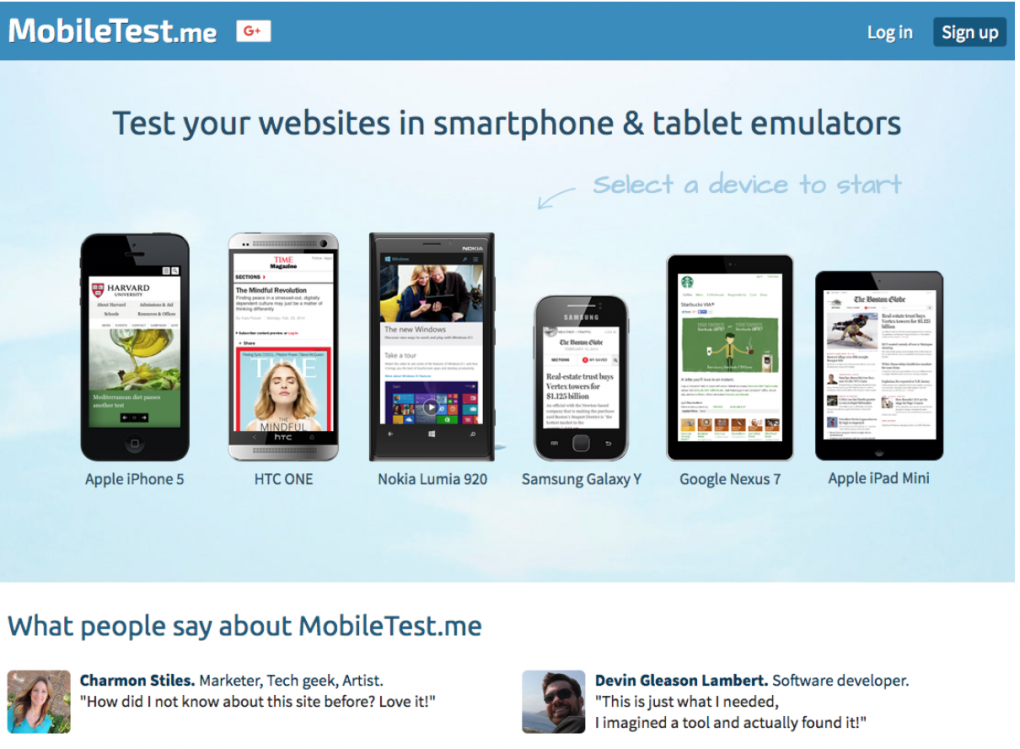
Intelligent business strategies should focus on getting to the clients first. The faster you get to them, the more capable they find you, the more your business will thrive. So, enhance the mobile experience of your website and see how your business improves accordingly.
Guest author: Premjith leads the Digital Marketing team at Aufait Technologies, a top-notch SharePoint development company. He also heads the SEO team at Mindster, a frontier mobile app development company in India. With his 4 valuable years of experience in online marketing, he helps clients expand their online presence and mushroom novel business ideas.
If your site isn’t optimized for mobile consumption, your brand isn’t sustainable and business will likely suffer.' />For any business in 2020, a mobile-friendly website isn’t an option—it’s a necessity.
You might be surprised to know that more than half of all web traffic is generated from mobile devices like iPhones, iPads, Android phones, and tablets. Now, more than ever, if a business’s website isn’t mobile-friendly and easy to view on a small screen, a brand could miss out on more than 50% of potential customers.
In 2020, almost 4.5 billion people worldwide use the internet, and a large majority—3.9 billion people—access it via a mobile device.
If your site isn’t optimized for mobile consumption, your brand isn’t sustainable and business will likely suffer.

What does it mean to be mobile-friendly?
When your website is mobile-friendly, it’s designed, developed, and optimized for users on all standard mobile devices.
How mobile-friendly is your website?
You can use this Google tool to test if your current website is mobile-friendly. This simple test takes less than one minute to assess how your site stacks up. You’ll learn what usability errors occur on your site and how you can improve.
Why is it important to be mobile-friendly?
Aside from the fact that more and more internet users and consumers are using mobile devices to scan the internet and shop online, mobile-friendly websites benefit from a host of other advantages, too. For example, Google prioritizes mobile-friendly websites, which means your business can’t afford to be mobile-unfriendly. Google is responsible for almost 95% of all internet search traffic, so if your website is pushed down on the search rankings, you’ll miss out on important exposure and business.
6 Things You Can Do To Mobile-optimize Your Website Today
1. Prioritize Easy Navigation
When a website isn’t mobile-friendly, it’s often difficult to navigate, view, and use on a mobile device. Website visitors might have to zoom to read content or scroll endlessly to find a button or link on which to click. This kind of website experience is frustrating, and users are more likely to abandon the site. In order to prevent unnecessary bounces from your website, make sure you prioritize easy navigation. Enlarge buttons, text, and menu options. Touch screen navigation can lead to accidental clicks if your buttons are too big, too small, or in the path of a finger that's trying to get the page to scroll.
2. Make Sure It’s Responsive
When a website is responsive, it’s easier for the site viewer; it minimizes scrolling, panning, zooming, and—most importantly—confusion. Website visitors don’t want to be confused when they land on your website; a confused customer never acts.
Your Websites Are Now Mobile Friendly Cell Phones
Responsive design makes the experience enjoyable for every visitor, regardless of what device they use to view your site. Responsive design uses a grid system which means the page is divided into columns (typically 12) that are sized at 100% of the width of the browser. This grid is fluid and flexible and the content within it can adapt and rearrange itself (move, stack, etc.) to fit the screen size. The term 'responsive' is used because the grid and content within it are able to recognize and 'respond' to the size the screen on which it appears.
To ensure your website is responsive, hire a professional developer to build your site, or create it using a responsive platform like Squarespace.
3. Don’t Block Javascript, CSS, or Image Files, and Stay Away from Flash
Without getting too technical, Javascript and CSS allow Google to view your website as a viewer and then properly index it for optimal search rankings. If your website blocks the Googlebot’s access, it can result in lower rankings and less visibility.
Avoid Flash—it’s not supported by Android or iOS, so even if you use it, it won’t appear on mobile devices; this will lead to users seeing an error that reads something like “Unplayable Content.” This kind of error will likely confuse your viewer and cause a less-than-satisfactory experience.
4. Optimize Images
Your Websites Are Now Mobile Friendly Resorts
When dealing with images, make sure you only include high-quality photos and graphics.
Refrain from using images that are too small or low-resolution. Maintain consistency by ensuring that the mobile site and the desktop site both have the same alt text for images, which is the text used to describe an image.
5. Stick to Standard Fonts
Standard fonts are much easier to read on small devices; they’re web-safe and compatible with HTML/CSS. Many devices like Android and iOs come with preinstalled web-safe fonts like Open Sans, Lato, or Roboto. You'll also want to ensure you optimize font size for mobile—16px is generally the rule for best font size for body copy on mobile. What may appear a good size on your desktop may appear tiny on a phone and tiny text on a tiny device is a big strain on the eyes. You can control font sizes on different screens with media queries. A good rule of thumb is to avoid using highly decorative script fonts because they will be hard to read on a small screen. Choose a clean, simple serif font like Georgia or any common sans-serif font like Roboto for a long body of text.
6. Keep Your Language Clear
Your Websites Are Now Mobile Friendly Countries
When branding for mobile, strive for shorter subject lines, less text, and include large CTA buttons (but not so big that they take up the entire mobile screen). With the rise of mobile, there’s a trend that prioritizes easy-to-digest content. Assess your current online content. Look at your website, blog, and email marketing. Where can you simplify without losing the core of your message? Think intentionally, and be as strategic as possible in your culling. When you write your content, be sure to craft the same clear headings on mobile that you do on desktop.