
This topic includes the following sections:
System Requirements for Installing the JDK on macOS
Java SE 6 Downloads Go to the Oracle Java Archive page. Thank you for downloading this release of the Java TM Platform, Standard Edition Development Kit (JDK TM). The JDK is a development environment for building applications, applets, and components using the Java programming language. The Device I/O Project provides a Java-level API for accessing generic device peripherals on embedded devices. It covers some of the most common peripheral devices found in today's embedded platforms including: General Purpose Input/Output (GPIO) Inter-Integrated Circuit Bus (I2C) Universal Asynchronous Receiver/Transmitter (UART).
- Java Platform, Enterprise Edition 6 Web Profile SDK Update 1 (with JDK 6 U23) Java Platform, Enterprise Edition 6 SDK. Javaeesdk-508-mac-ml-nojdk.zip Java EE 5.
- When I upgrade to Mavericks, it uninstalls Java 1.6. I can install Java 7, but for some applications and development work, I still need access to Java 6. How can I reinstall Java 6 in Mavericks? Apple docs generally recommend downloading Java directly from Oracle, but I don't see a Mac version listed on the Oracle download page for Java SE 6.
- The Java SE Runtime Environment contains the Java virtual machine,runtime class libraries, and Java application launcher that arenecessary to run programs written in the Java programming language.It is not a development environment.
The following are the system requirements for installing the JDK on macOS:
Any Intel-based computer running macOS.
Administrator privileges.
You cannot install Java for a single user. Installing the JDK on macOS is performed on a systemwide basis for all users. Administrator privileges are required to install the JDK on macOS.
Determining the Default JDK Version on macOS
Jdk 6 Mac
When starting a Java application through the command line, the system uses the default JDK.
Java Jdk 6 Mac
You can determine which version of the JDK is the default by entering java -version in a Terminal window. If the installed version is 11 Interim 0, Update 0, and Patch 0, then you see a string that includes the text 11. For example:
To run a different version of Java, either specify the full path, or use the java_home tool. For example:
$ /usr/libexec/java_home -v 11 --exec javac -version
Installing the JDK on macOS
- Download the JDK
.dmgfile,jdk-11.interim.update.patch-macosx-x64.dmg.Before the file can be downloaded, you must accept the license agreement.
- From either the browser Downloads window or from the file browser, double-click the
.dmgfile to start it.A Finder window appears that contains an icon of an open box and the name of the.pkgfile. - Double-click the
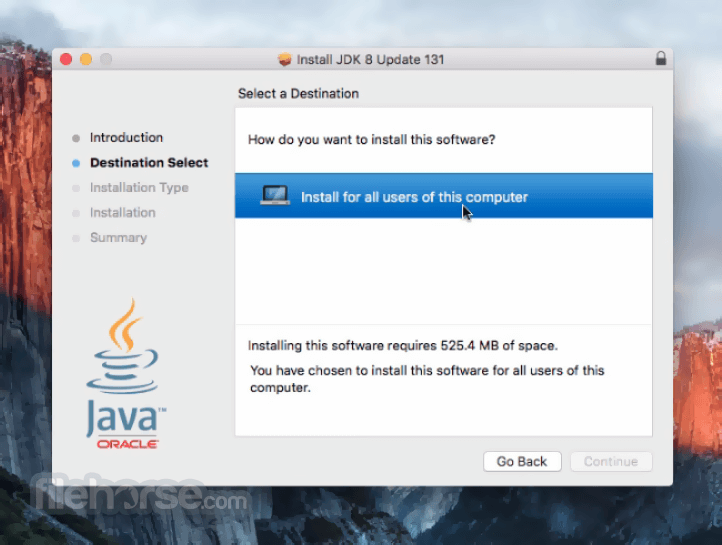
JDK 11.pkgicon to start the installation application.The installation application displays the Introduction window. - Click Continue.
- Click Install. A window appears that displays the message: Installer is trying to install new software. Enter your password to allow this.
- Enter the Administrator user name and password and click Install Software.The software is installed and a confirmation window is displayed.
.dmg file if you want to save disk space. Uninstalling the JDK on macOS
You must have Administrator privileges.Note:
Do not attempt to uninstall Java by removing the Java tools from /usr/bin. This directory is part of the system software and any changes will be reset by Apple the next time that you perform an update of the OS.
- Go to
/Library/Java/JavaVirtualMachines. - Remove the directory whose name matches the following format by executing the
rmcommand as a root user or by using thesudotool:/Library/Java/JavaVirtualMachines/jdk-interim.update.patch.jdkFor example, to uninstall 11 Interim 0 Update 0 Patch 0:
$ rm -rf jdk-11.jdk
Installation FAQ on macOS Platform
This topic provides answers for the following frequently asked questions about installing JDK on macOS computers.
1. How do I find out which version of Java is the system default?
When you run a Java application from the command line, it uses the default JDK. If you do not develop Java applications, then you do not need to worry about this. See Determining the Default JDK Version on macOS.
2. How do I uninstall Java?
See Uninstalling the JDK on macOS.
3. After installing Java for macOS 2012-006, can I continue to use Apple's Java 6 alongside the macOS JDK for Java 11?
If you want to continue to develop with Java 6 using command-line, then you can modify the startup script for your favorite command environment. For bash, use this:

$ export JAVA_HOME=`/usr/libexec/java_home -v 11`
Some applications use /usr/bin/java to call Java. After installing Java for macOS 2012-006, /usr/bin/java will find the newest JDK installed, and will use that for all of the Java-related command-line tools in /usr/bin. You may need to modify those applications to find Java 6, or contact the developer for a newer version of the application.
4. Can I restore Apple Java after uninstalling Oracle Java?
Go back to Apple Java using the following instructions:
Uninstall Oracle Java by deleting the plug-in file. From a command-line, enter:
$ sudo rm -rf '/Library/Internet Plug-Ins/JavaAppletPlugin.plugin'Create a symlink using the following command, entered on a single line:
$ sudo ln -s /System/Library/Java/Support/CoreDeploy.bundle/Contents/JavaAppletPlugin.plugin '/Library/Internet Plug-Ins/JavaAppletPlugin.plugin'
5. What happened to the Java Preferences app in Application Utilities?
The Java Preferences app was part of the Apple Java installation and is not used by Oracle Java. Therefore, macOS releases from Apple that do not include Apple Java will not include Java Preferences.
The following are the system requirements for installing the JDK and the JRE on macOS:
Any Intel-based computer running macOS.
Administrator privileges.
You cannot install Java for a single user. Installing the JDK and JRE on macOS is performed on a systemwide basis for all users. Administrator privileges are required to install the JDK and JRE on macOS.
When you install the JDK, it also installs the JRE. However, the system will not replace the current JRE with a lower version.
To determine the current JRE version installed on your system, see Determining the JRE Version Installed on macOS. To install an earlier version of the JRE, you must first uninstall the current version. See Uninstalling the JRE on macOS.
When you install the JRE, you can install only one JRE on your system at a time. The system will not install a JRE that has an earlier version than the current version.
To determine the current JRE version installed on your system, see Determining the JRE Version Installed on macOS. To install an earlier version of the JRE, you must first uninstall the current version. See Uninstalling the JRE on macOS.
Note:
Installing a JRE from Oracle will not update
java -versionsymlinks or addjavato your path. To do this, you must install the JDK.